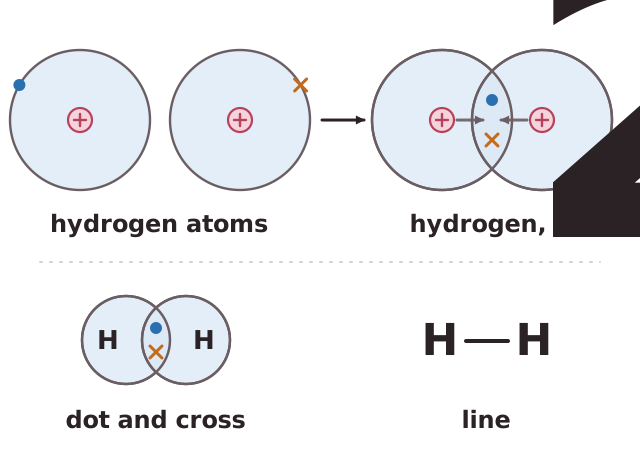
Atoms of non-metal elements usually bond by sharing electrons rather than transferring them. A covalent bond forms when a pair of electrons is shared between two atoms. The shared pair is attracted to the nuclei of both atoms at the same time, and this attraction holds the two atoms together.
Sharing lets each atom have a full outer shell. A hydrogen atom has one electron and needs two to fill its outer shell. Two hydrogen atoms each share their electron, so there are two electrons in the shared pair and each atom has a full outer shell. This is a single covalent bond, and it is strong.
Each shared pair is one covalent bond. Covalent bonds are found between atoms of non-metal elements, for example in chlorine, water and methane.