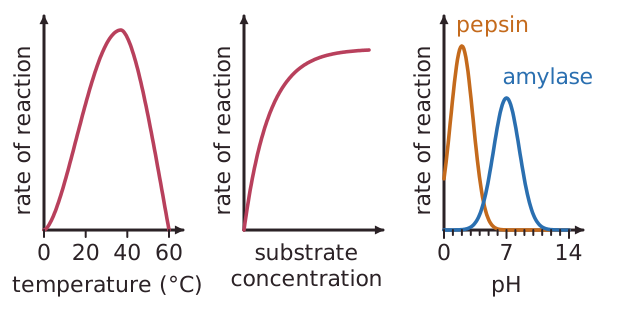
The rate of an enzyme-controlled reaction depends on conditions. As the temperature rises, the rate increases, because particles have more kinetic energy and collide with active sites more often. The rate peaks at the optimum temperature, about 37 °C for human enzymes. Above the optimum the bonds in the enzyme break, the active site changes shape and the enzyme is denatured, so the rate falls quickly.
As substrate concentration increases, the rate rises at first, because there are more collisions between substrate molecules and active sites. Then the line levels off. At this point all the active sites are occupied, so adding more substrate makes no difference.
Each enzyme also has an optimum pH. Pepsin in the stomach works best at about pH 2, but amylase in the mouth works best near pH 7. Away from the optimum the shape of the active site changes and the rate is lower, and extreme pH values denature the enzyme.