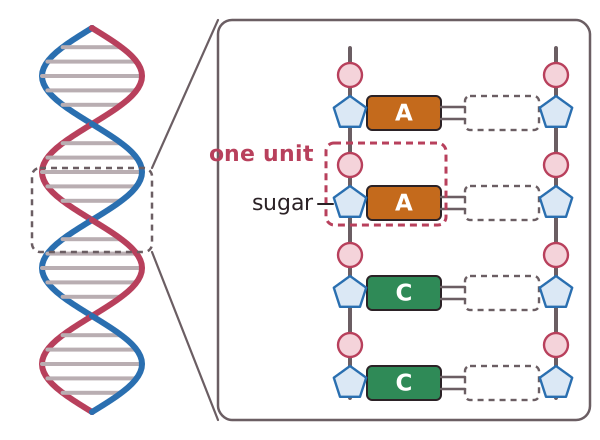
DNA is a polymer, which means it is a very long molecule made of many small repeating units joined in a chain. The units in DNA are called nucleotides.
Each nucleotide has three parts: a sugar, a phosphate group, and one of four different bases attached to the sugar. The four bases are A (adenine), T (thymine), C (cytosine) and G (guanine). The sugar and phosphate groups of neighbouring nucleotides join up to form the backbone of a strand.
DNA is made of two strands that are coiled together to form a double helix. The two strands are linked by pairs of bases that match each other, called complementary base pairs. A always pairs with T, and C always pairs with G. The bases in each pair are joined together by weak hydrogen bonds, which hold the two strands together but can be separated when the DNA needs to be copied.