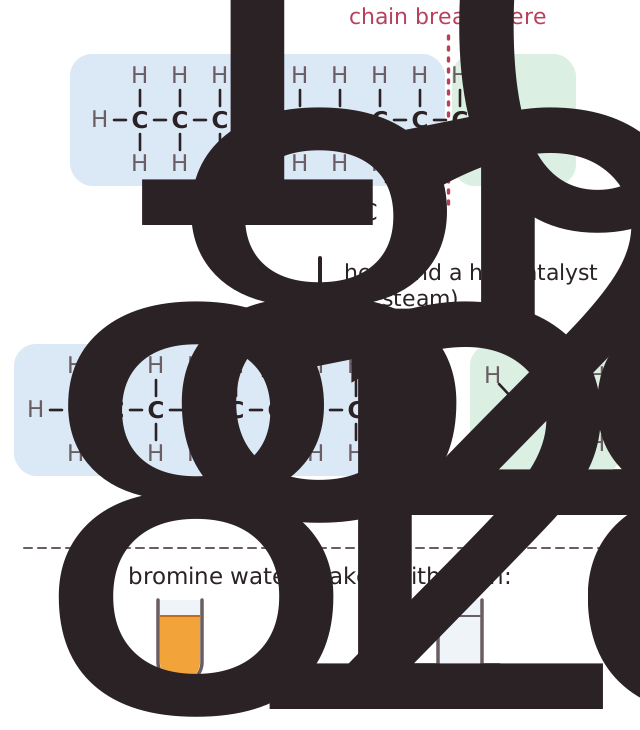
Crude oil contains many long hydrocarbon molecules. Alkanes such as decane, C10H22, are saturated because they have only single bonds between carbon atoms. Cracking breaks larger alkane molecules into smaller, more useful ones. The long-chain vapour is heated and passed over a hot catalyst, or mixed with steam at a high temperature.
Cracking always makes at least one alkene. Alkenes are unsaturated because they contain a C=C double bond. For example: decane → octane + ethene, which is C10H22 → C8H18 + C2H4. The atoms balance, with 10 carbon and 22 hydrogen on each side.
Alkenes are more reactive than alkanes. Bromine water turns from orange to colourless when shaken with an alkene, but stays orange with an alkane. This is the test for an unsaturated molecule.