Fractional distillation separates crude oil into fractions, but it does not give the amounts we need. Crude oil contains plenty of long-chain hydrocarbons, such as those in bitumen and fuel oil, which are less useful. There is more demand for short-chain fractions such as petrol, which burn more easily and are runnier. Cracking turns surplus long molecules into shorter, more useful ones, so supply can match demand.
Cracking also makes alkenes. Alkenes are used to make polymers, such as poly(ethene), and other chemicals.
In the fractional distillation practical, synthetic crude oil is heated and the vapours are collected in separate test tubes over different temperature ranges. Fractions with short molecules are easier to ignite and have a low viscosity, so they are runny. Fractions with long molecules are harder to ignite and are more viscous.
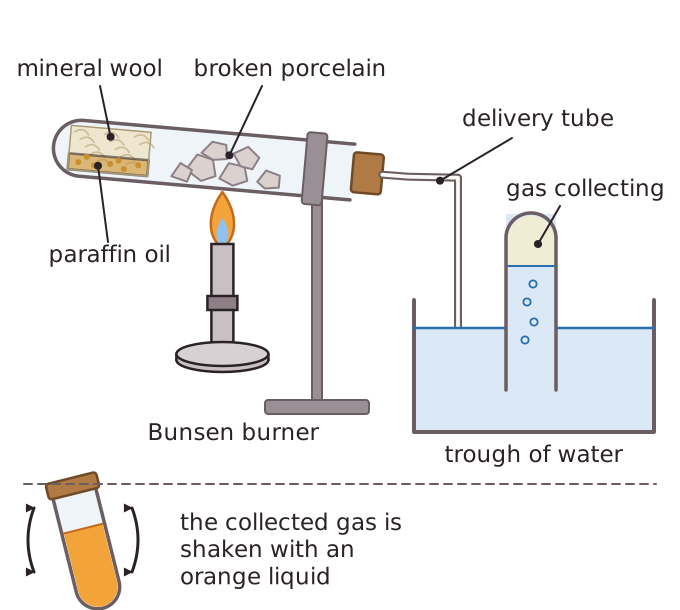
In the cracking practical, paraffin oil on mineral wool is heated, and the vapour passes over a hot catalyst such as broken porcelain. The gas collected is tested with bromine water, which turns colourless if an alkene is present. The delivery tube must be taken out of the water before heating stops, to prevent suck-back.