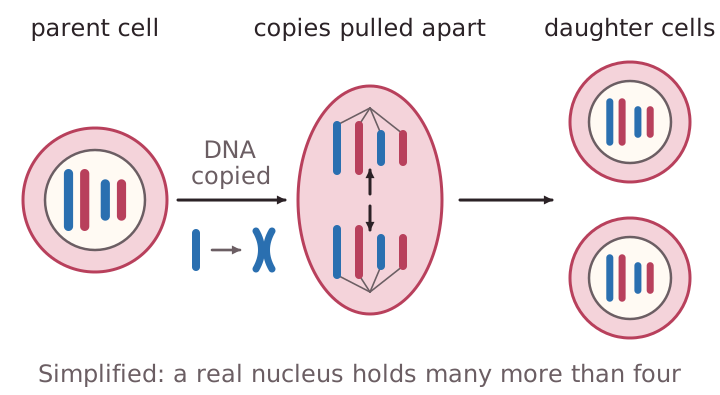
When a cell divides by mitosis, one parent cell makes two daughter cells. Before the division the DNA is copied, so each chromosome is doubled. During mitosis the copies are separated, and each daughter cell receives one complete set of chromosomes in its nucleus.
This means each daughter cell has an identical set of chromosomes to the parent cell. The two daughter cells are therefore genetically identical to each other and to the parent.
Human body cells have 23 pairs of chromosomes, which is 46 in total. Cells with two sets of chromosomes, arranged in pairs, are called diploid cells. Mitosis in a human body cell therefore produces two genetically identical diploid body cells, each with 46 chromosomes.