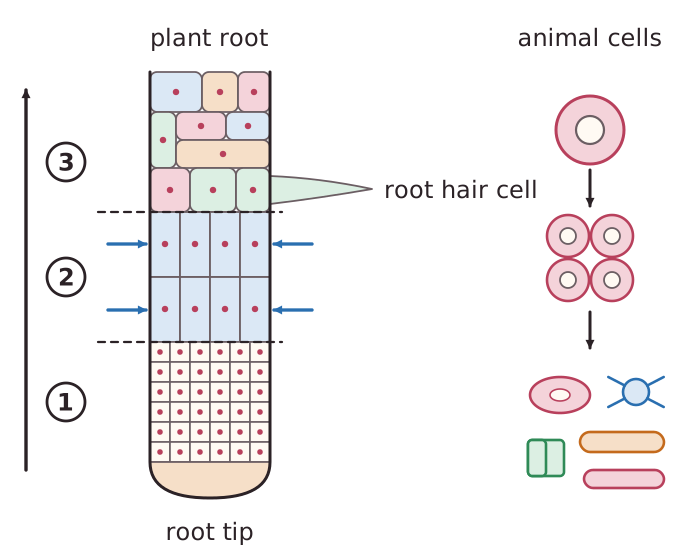
Organisms grow by increasing the number of their cells. In animals, growth happens mainly by cell division. Cells divide by mitosis to make more cells, and the new cells then become specialised for particular jobs. This change is called differentiation. In most animals, once a cell has differentiated it generally can no longer change into a different type, and most growth stops when the animal reaches adulthood.
Plants also grow by cell division and differentiation, but they have a third process as well, called elongation. In elongation the new cells absorb water and get longer. This makes the plant taller, and it can make up a large part of a plant's growth.
Plants keep growing throughout their lives. Cell division in plants happens mainly at the tips of the roots and shoots.