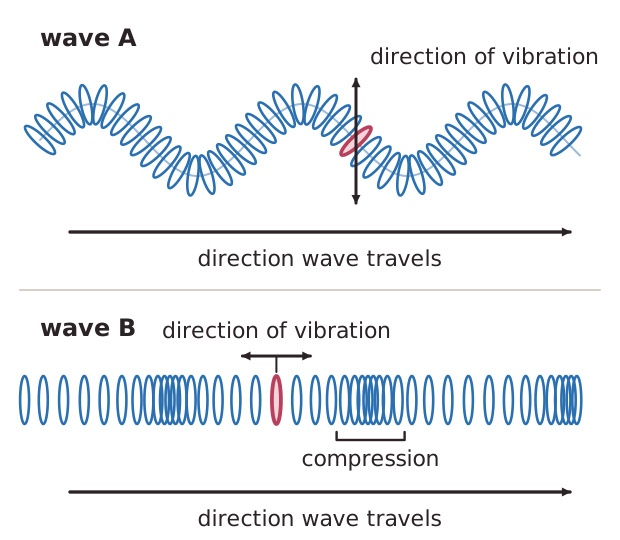
A wave transfers energy from one place to another without transferring matter. Waves may be either transverse or longitudinal, and the difference is the direction of the vibrations compared with the direction the wave travels.
In a transverse wave the vibrations are at right angles to the direction of travel. The ripples on a water surface are an example of a transverse wave: the water moves up and down while the ripple moves outwards across the surface.
In a longitudinal wave the vibrations are parallel to the direction of travel. The wave is made of regions where the particles are squashed closer together, called compressions, and regions where they are spread further apart, called rarefactions. Sound waves travelling through air are longitudinal.
It is the wave, and not the water or air itself, that travels. A cork floating on ripples simply bobs up and down on the spot as the ripples pass, and it is not carried along with them. In the same way, you can hear a sound from across a room without a wind blowing from the source to you. The particles of air only vibrate back and forth about a fixed position, and they pass the energy on to their neighbours.