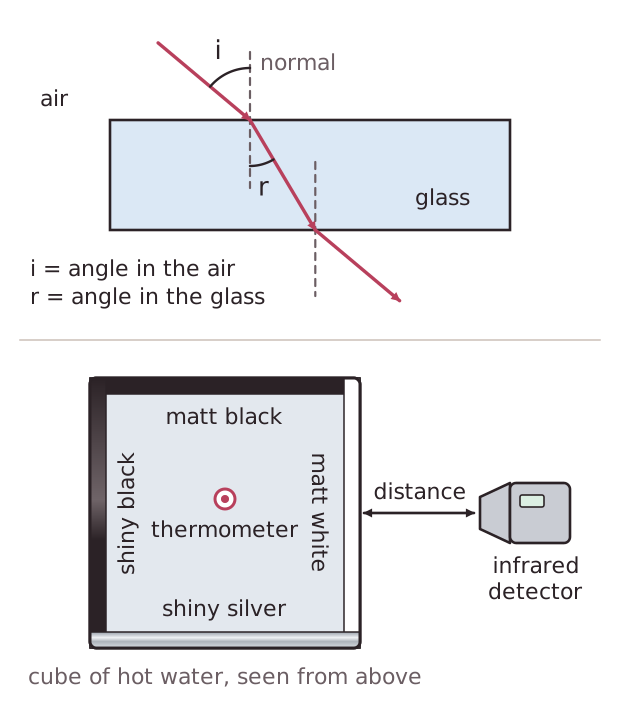
When an electromagnetic wave meets a substance, the substance may absorb it, transmit it, reflect it or refract it. How much of each happens varies with the wavelength of the wave. For example, glass transmits visible light, a shiny metal surface reflects it, and a dark surface absorbs much of it. (Higher tier)
Refraction is the change of direction of a wave at the boundary between two media. It happens because the wave travels at a different speed (velocity) in each substance. When light passes from air into glass at an angle, it slows down and bends towards the normal, the line at right angles to the boundary. When it leaves the glass, it speeds up and bends away from the normal. A ray diagram shows this with the normal drawn at the boundary and the ray bent at the point where it crosses. (Higher tier) In terms of wave fronts, the wave fronts get closer together in the slower medium. The frequency stays the same, so the wavelength becomes shorter.
Required practical 21 investigates how the amount of infrared radiation a surface radiates depends on the nature of that surface. A Leslie cube is a metal cube filled with hot water, with a different surface on each side: matt black, shiny black, matt white and shiny silver. An infrared detector is held at the same distance from each side in turn and the amount of infrared radiation detected is recorded. The surface is the independent variable. The temperature of the water, the distance and the detector must be kept the same. The matt black surface radiates the most infrared and the shiny silver surface radiates the least.