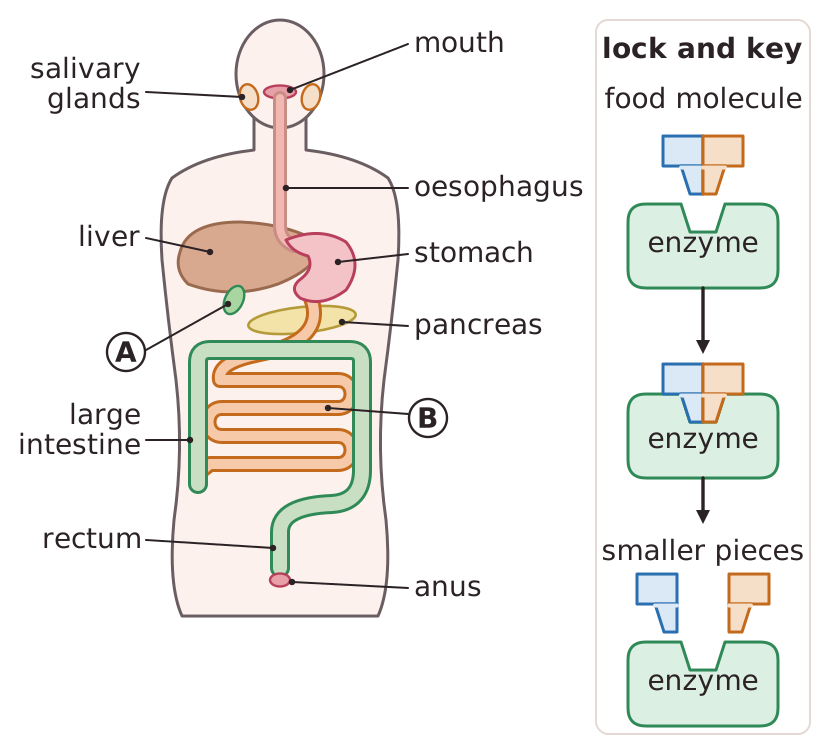
The digestive system is an organ system: a group of organs that work together to digest and absorb food. Digestion changes large food molecules, which cannot pass into the blood, into small soluble molecules that can. Digestive enzymes do this job. Enzymes catalyse specific reactions because of the shape of their active site. In the lock and key model, the substrate fits the active site like a key in a lock, so each enzyme works on only one kind of substrate. A high temperature or the wrong pH changes the shape of the active site, and the enzyme is denatured and stops working.
There are three groups of digestive enzyme. Carbohydrases break down carbohydrates into simple sugars, and amylase is a carbohydrase that breaks down starch. Proteases break down proteins into amino acids. Lipases break down lipids (fats) into glycerol and fatty acids. Amylase is made in the salivary glands, the pancreas and the small intestine. Protease is made in the stomach, the pancreas and the small intestine. Lipase is made in the pancreas and the small intestine. As a word equation: starch (with amylase) gives sugars. The products of digestion are used to build new carbohydrates, lipids and proteins, and some glucose is used in respiration.
Bile is made in the liver and stored in the gall bladder. It is alkaline, so it neutralises the hydrochloric acid that arrives from the stomach. Bile also emulsifies fat, which means it breaks large fat droplets into many small droplets. This increases the surface area. The alkaline conditions and the large surface area both increase the rate at which lipase breaks the fat down.
Required practical 3 uses reagents to test foods. Benedict's reagent is heated with a sample and goes from blue to green, yellow, orange or brick red if sugar is present. Iodine solution goes from orange to blue-black if starch is present. Biuret reagent goes from blue to purple if protein is present. Required practical 4 investigates the effect of pH on the rate of reaction of amylase. Starch is mixed with amylase and a buffer at one pH, and a drop of the mixture is tested with iodine every 30 seconds. The time taken for the starch to be completely digested is recorded, because the iodine stops turning blue-black. The temperature is controlled with a water bath, and the whole test is repeated at a range of pH values.