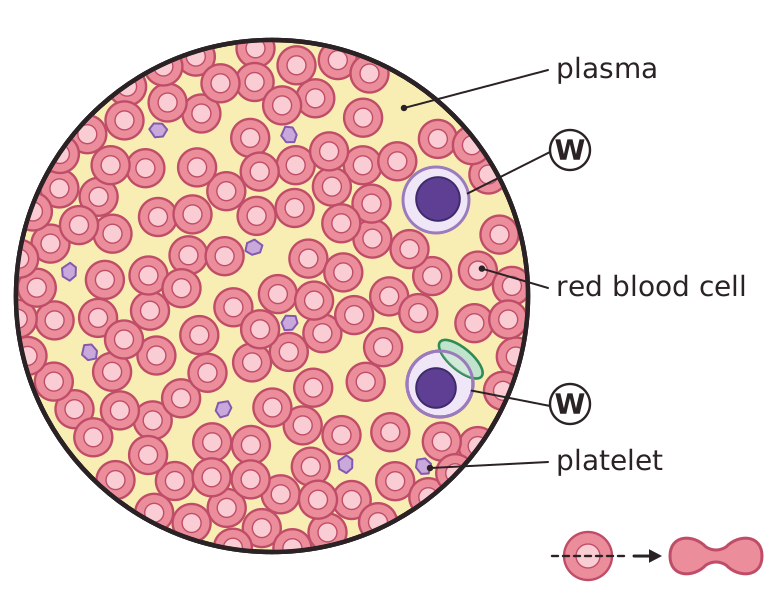
Blood is a tissue made of plasma, in which red blood cells, white blood cells and platelets are suspended. Plasma is a pale yellow liquid that carries many substances around the body: digested food such as glucose and amino acids, carbon dioxide from the organs to the lungs, urea from the liver to the kidneys, and hormones. It also carries heat around the body.
Red blood cells carry oxygen from the lungs to all the cells of the body. They contain haemoglobin, a red pigment that binds to oxygen. Red blood cells are adapted to this job. They have no nucleus, which leaves more room for haemoglobin. They are shaped like a biconcave disc, which gives a large surface area for oxygen to be absorbed and released. They are also small and flexible, so they can squeeze through capillaries.
White blood cells defend the body against pathogens. Some engulf and digest pathogens in a process called phagocytosis. Others make antibodies that destroy particular pathogens, or antitoxins that neutralise the toxins that pathogens produce. Under a microscope, white blood cells have a nucleus, which stains dark, and they are usually larger than red blood cells.
Platelets are small fragments of cells with no nucleus. They help the blood to clot at a wound. The clot forms a scab, which stops blood being lost and stops microorganisms getting in. In a blood sample under a microscope, red blood cells are by far the most numerous and have no nucleus, so they look like pale discs.