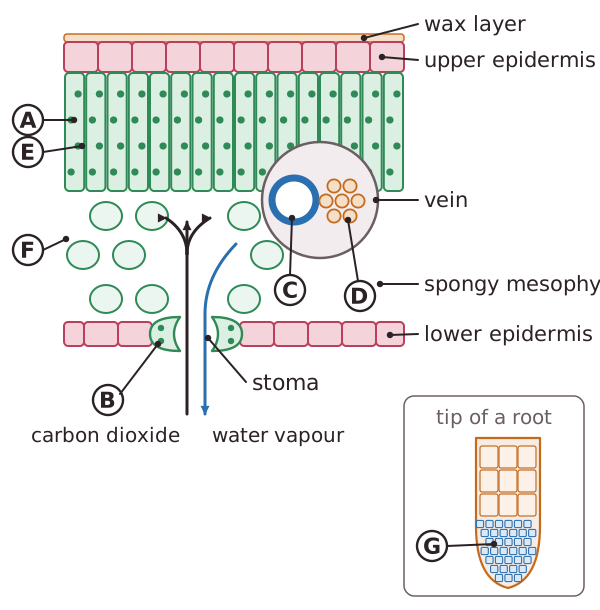
A leaf is a plant organ. Like every organ, it is built from several tissues that work together, and the structure of each tissue fits its job.
The epidermis is a thin layer of cells that covers the leaf and protects it. Pairs of guard cells in the epidermis surround tiny pores called stomata. When the guard cells change shape they open or close each stoma, which controls how much gas passes in and out and how much water is lost from the leaf. This water loss matters because the plant must not dry out.
Beneath the upper epidermis is the palisade mesophyll. Its cells are tall, packed tightly together and full of chloroplasts, so most of the light that reaches the leaf is absorbed here for photosynthesis. The spongy mesophyll lies below. Its cells are loosely arranged with large air spaces between them, which lets gases diffuse easily through the leaf.
Xylem and phloem are the transport tissues and run together through the veins. Xylem carries water and mineral ions. Phloem carries dissolved sugars. Meristem tissue is found at the growing tips of shoots and roots. Its cells keep dividing and then specialise, so the plant can grow.