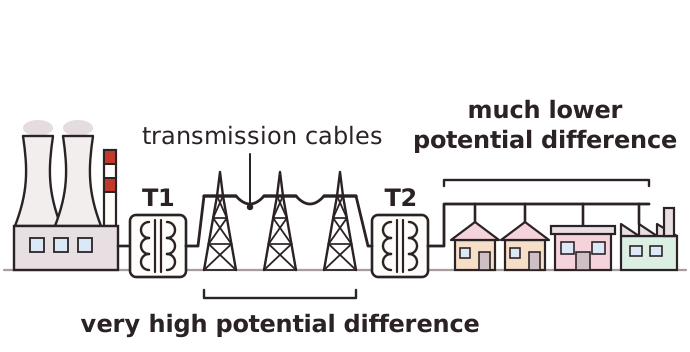
The National Grid is a system of cables and transformers that links power stations to consumers. Electrical power is transferred from the power stations to homes, schools and factories through it.
A step-up transformer is used at the power station. It increases the potential difference to a very high value for the transmission cables. Near the consumers, step-down transformers decrease the potential difference to a much lower value that is safe for domestic use, which is about 230 V.
This makes the Grid an efficient way to transfer energy. Power = potential difference × current, so for the same power, a higher potential difference means a lower current in the cables. The energy wasted as heat in a cable depends on I2R, so a lower current means much less energy is transferred as heat to the surroundings.
Higher tier only: a transformer obeys potential difference across primary coil × current in primary coil = potential difference across secondary coil × current in secondary coil (Vp Ip = Vs Is). For example, a transformer with 20 V and 6 A in the primary coil and 120 V across the secondary coil has a secondary current of (20 × 6) ÷ 120 = 1 A. The potential difference goes up and the current goes down. You do not need to know the structure of a transformer.