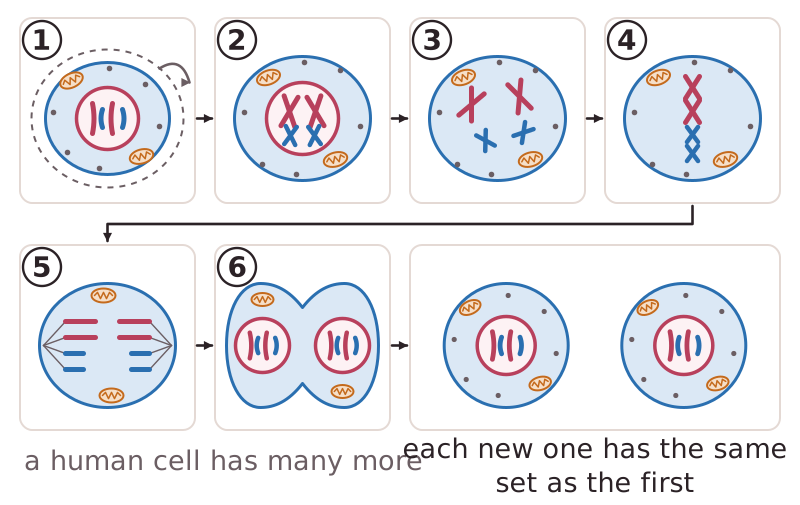
Cells divide in a series of stages called the cell cycle. During the cell cycle the genetic material is doubled and then divided to make two identical cells. There are three overall stages.
In the first stage the cell grows and increases the number of sub-cellular structures such as ribosomes and mitochondria. The DNA replicates to form two copies of each chromosome.
In the second stage, mitosis, one set of chromosomes is pulled to each end of the cell and the nucleus divides. In the final stage the cytoplasm and cell membranes divide to form two identical cells. Each new cell has the same number of chromosomes as the original cell. A human body cell has 46 chromosomes.
Mitosis is important in the growth and development of multicellular organisms, because it makes new cells that are identical to the parent cell. You may be asked to spot it in a situation such as cells increasing in number at a growing root tip.