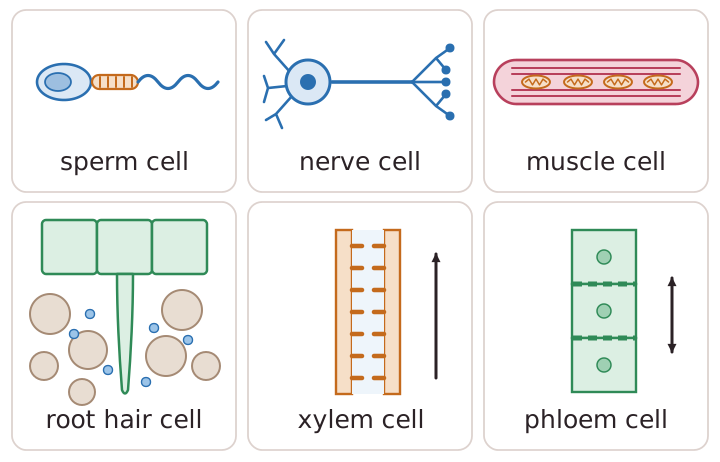
Cells may be specialised to carry out a particular function. Their structure is adapted to that job, and specialised cells work together in a tissue, an organ or an organ system.
In animals, a sperm cell has a tail to swim to the egg and a head that carries the genetic material. It also has many mitochondria to release the energy needed for swimming. A nerve cell has a long fibre that carries electrical signals from one part of the body to another. A muscle cell contains special fibres that can contract (get shorter), and many mitochondria to release the energy for this.
In plants, a root hair cell has a long, thin extension that increases the surface area for absorbing water and mineral ions from the soil. Xylem cells join end to end to make hollow tubes that carry water and mineral ions up the plant. They are strengthened by a substance called lignin. Phloem cells also form tubes, which carry dissolved sugars around the plant. Their end walls have small holes so the sugar solution can flow through.