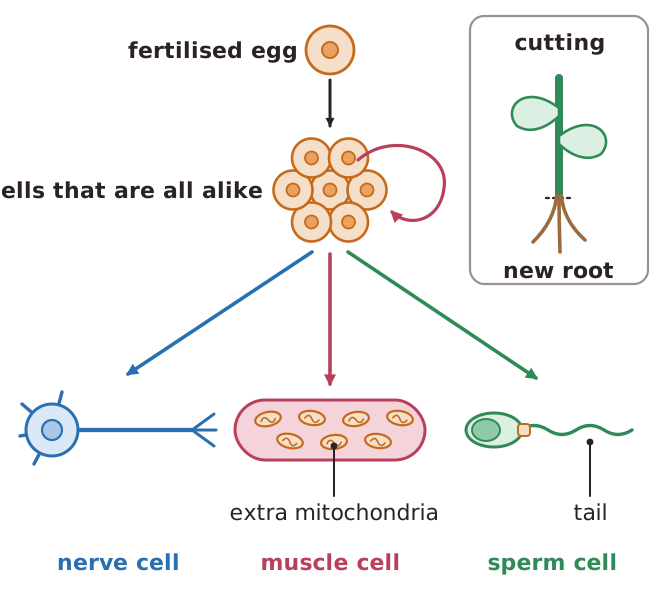
A fertilised egg divides again and again to form an embryo. At first the cells are all alike. As the organism develops, the cells differentiate to form different types of cell. When a cell differentiates it acquires different sub-cellular structures, such as extra mitochondria or a tail, so that it can carry out a certain function. It has then become a specialised cell.
Cell differentiation is important because it allows a many-celled organism to have cells that do different jobs, which work together in tissues and organs.
Animals and plants differ in when this happens. Most types of animal cell differentiate at an early stage of development. In a mature animal, cell division is mainly restricted to repair and replacement, for example making new skin cells to replace those that are lost. In contrast, many types of plant cell keep the ability to differentiate throughout life. A cutting from a plant can therefore grow new roots, because some of its cells can still differentiate into root cells.