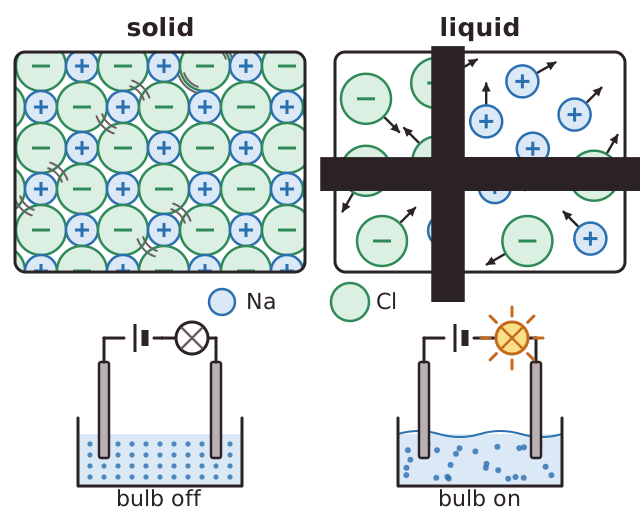
Ionic compounds have a regular structure called a giant ionic lattice. Positive and negative ions are arranged in a repeating pattern, and there are strong electrostatic forces of attraction in all directions between oppositely charged ions. Sodium chloride is the example you need to know, with sodium ions, Na+, and chloride ions, Cl−, packed together in a lattice.
Ionic compounds have high melting points and high boiling points. Every ion is held to many neighbours by strong bonds, so a large amount of energy is needed to break the many strong bonds and separate the ions.
Solid ionic compounds do not conduct electricity, because the ions are held in fixed positions. When an ionic compound is melted or dissolved in water, it does conduct electricity. The ions are free to move, so they carry charge and the charge can flow.
You do not need to know the structures of ionic compounds other than sodium chloride.