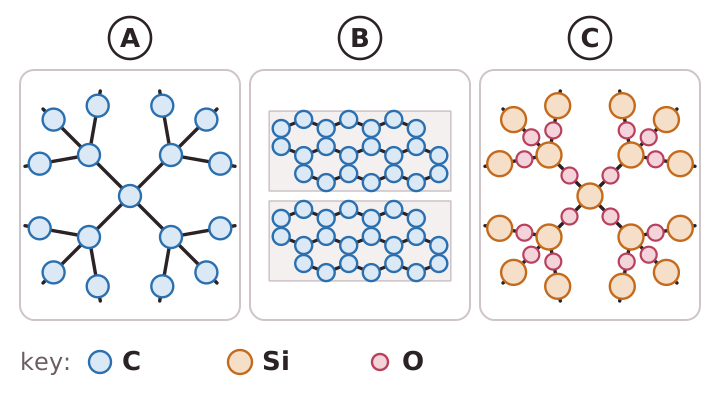
In a giant covalent structure all of the atoms are linked to other atoms by strong covalent bonds, in a huge network. There are no separate small molecules. Diamond and graphite are both forms of carbon, so they are made only of carbon atoms. Silicon dioxide, also called silica, is made of silicon and oxygen atoms. All three are giant covalent structures.
Substances with giant covalent structures are solids with very high melting points. To melt or boil them, the strong covalent bonds must be overcome. There are huge numbers of these bonds, so a large amount of energy is needed.
This is different from small molecules, where only the weak intermolecular forces are overcome and the covalent bonds stay in place. It is also why giant covalent structures have much higher melting points than small-molecule substances.
You should be able to recognise a giant covalent structure from a diagram of its bonding and structure. Look for a continuous network of atoms joined by covalent bonds, with no separate molecules.