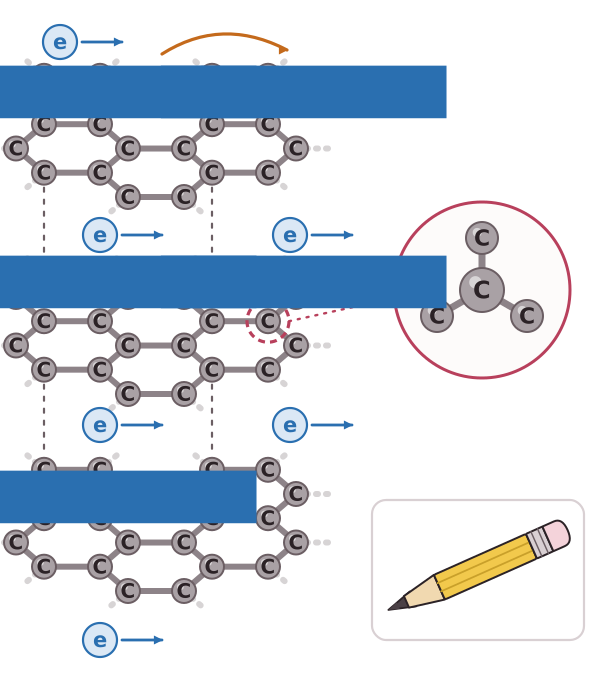
Graphite is another form of carbon. In graphite, each carbon atom forms three covalent bonds with three other carbon atoms. These bonds make flat layers of hexagonal rings. There are no covalent bonds between the layers, only weak forces, so the layers can slide over each other. This makes graphite soft and slippery, and it is used in pencils and as a lubricant.
Each carbon atom uses only three of its four outer electrons in bonding. The fourth electron from each atom is delocalised, which means it is free to move through the structure. These delocalised electrons carry charge, so graphite conducts electricity. In this way graphite is similar to metals, which also have delocalised electrons. This also makes graphite useful for electrodes.
Graphite has a very high melting point. The covalent bonds within each layer are strong, so a lot of energy is needed to break them.