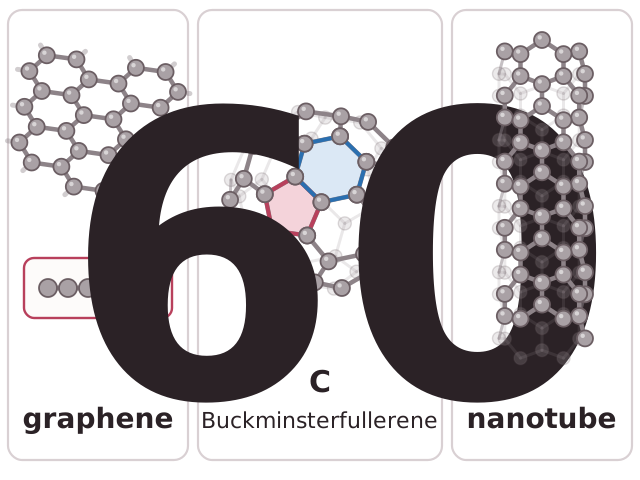
Graphene is a single layer of graphite. It is one atom thick, and its carbon atoms are joined in hexagonal rings. Each carbon atom forms three covalent bonds and has one delocalised electron. The strong covalent bonds make graphene very strong, and the delocalised electrons mean it conducts electricity. These properties make graphene useful in electronics and in composites, where it can strengthen a material without making it much heavier.
Fullerenes are molecules of carbon atoms with hollow shapes. Their structure is based on hexagonal rings of carbon atoms, but they may also contain rings of five or seven carbon atoms. The first fullerene to be discovered was Buckminsterfullerene, C60. Each molecule has 60 carbon atoms and a spherical shape.
Carbon nanotubes are cylindrical fullerenes. They have a very high length to diameter ratio, which means they are extremely long compared with their width. Their properties make them useful in nanotechnology, electronics and for strengthening materials.