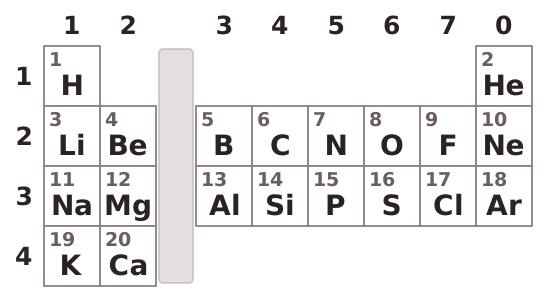
The periodic table lists the elements in order of atomic number, which is the number of protons in the nucleus of an atom. The elements are laid out so that those with similar properties sit in the same vertical column. Each column is a group, and each horizontal row is a period.
Elements in the same group have the same number of electrons in their outer shell. The outer shell electrons decide how an atom reacts, so elements in the same group have similar chemical properties. Lithium and sodium, in Group 1, each have one outer electron. Fluorine and chlorine, in Group 7, each have seven outer electrons. For Groups 1 to 7 the group number tells you the number of outer electrons, and Group 0 atoms have a full outer shell.
The table is called periodic because similar properties repeat at regular intervals as the atomic number increases. Electronic structure also tells you the position of an element: the period number is the number of occupied shells. Chlorine is 2,8,7, so it is in Group 7 and period 3.