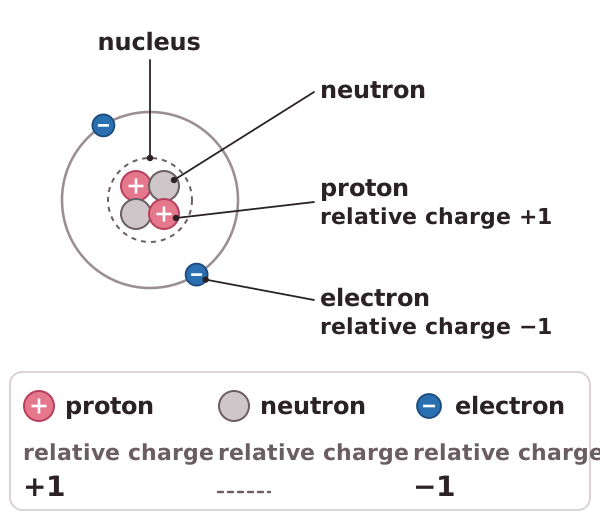
The nuclear model describes an atom as a small nucleus at the centre, made of protons and neutrons, with electrons around it. Each of these subatomic particles has a relative electrical charge. A proton has a charge of +1, a neutron has no charge (0) and an electron has a charge of −1 (minus 1).
In an atom the number of electrons is equal to the number of protons in the nucleus. The charge of each proton is the opposite of the charge of each electron, so they cancel out and atoms have no overall electrical charge. For example, a sodium atom has 11 protons and 11 electrons, so its charges add up to zero.
The number of protons in an atom of an element is its atomic number. All atoms of a particular element have the same number of protons, and atoms of different elements have different numbers of protons. This is why the atomic number identifies the element: any atom with 6 protons is carbon, and any atom with 8 protons is oxygen.