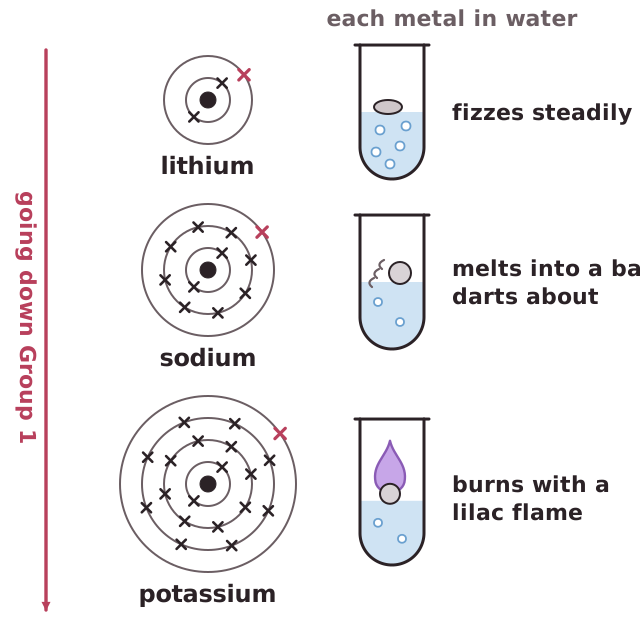
The elements in Group 1 are known as the alkali metals. The first three are lithium, sodium and potassium. Each atom has a single electron in its outer shell, and this gives them their characteristic properties. They are soft metals with low melting points and low densities, and each loses its one outer electron easily to form a 1+ ion.
They react with water to form a metal hydroxide and hydrogen. For example, 2Na + 2H2O → 2NaOH + H2. The hydroxide dissolves to give an alkaline solution, so universal indicator turns purple. With chlorine they form white metal chlorides, for example 2Na + Cl2 → 2NaCl. With oxygen they form metal oxides, for example 4Li + O2 → 2Li2O, which is why the shiny surface of the metals tarnishes quickly in air.
Reactivity increases going down the group. Lithium fizzes steadily in water, sodium melts into a ball and darts about, and potassium burns with a lilac flame. Lower down, the outer electron is further from the nucleus, so it is held less strongly and lost more easily.