A mixture consists of two or more elements or compounds that are not chemically combined. Air is a mixture of nitrogen, oxygen and other gases, and sea water is a mixture of water and dissolved salts. Because nothing has reacted, each substance in the mixture keeps its own chemical properties.
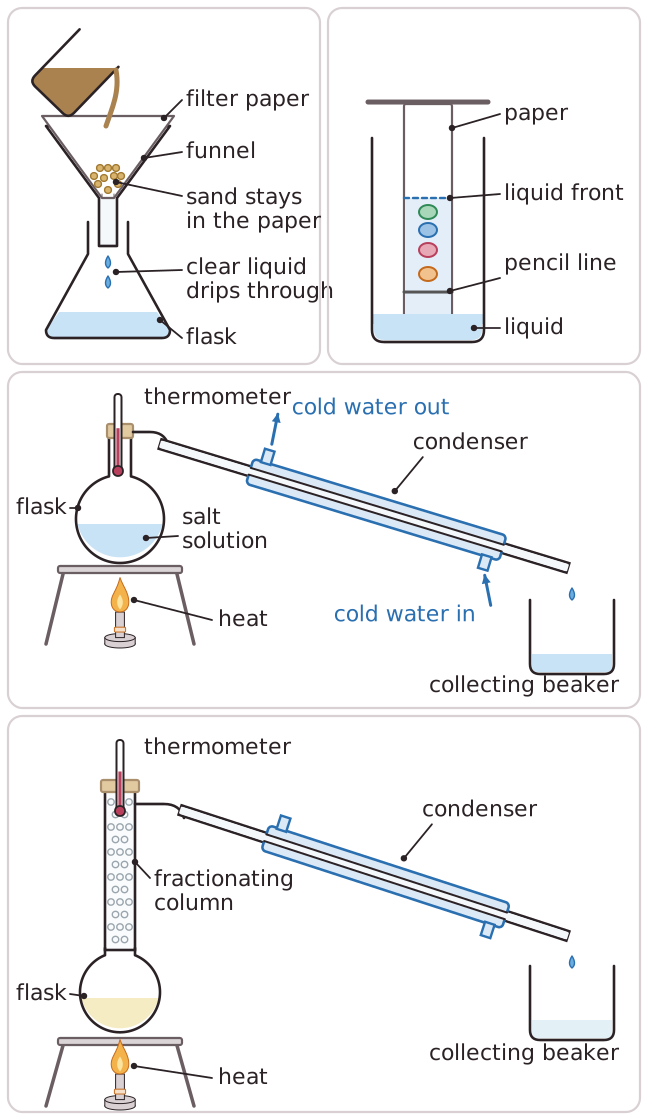
A mixture can be separated by physical processes. These do not involve chemical reactions and no new substances are made. The method you choose depends on the properties of the substances. Filtration separates an insoluble solid from a liquid, because the solid is caught in the filter paper. Crystallisation gets a soluble solid from its solution: some of the solvent is evaporated and the solution is left to cool, so crystals form. Simple distillation separates a solvent from a solution, for example pure water from salt water, by evaporating the solvent and condensing it again.
Fractional distillation separates a mixture of liquids that dissolve in each other, such as ethanol and water, because the liquids have different boiling points. The liquid with the lowest boiling point evaporates first and is collected first. Ethanol boils at a lower temperature than water, so it comes off first. Chromatography separates substances that dissolve in a solvent to different extents. The solvent moves up the paper and carries the more soluble substances further.