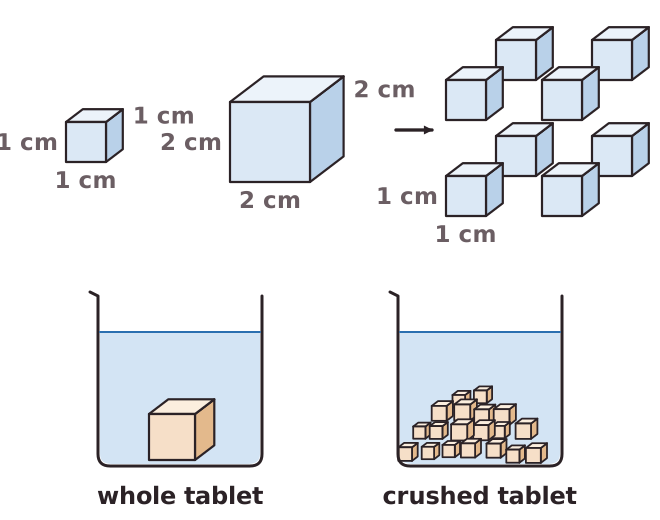
Only the particles on the surface of a solid can meet the other reactant. The particles inside are not exposed. When a solid is broken into smaller pieces, more of its particles are on the surface compared with the amount of solid there is. The size of this effect is measured by the surface area to volume ratio.
You can see this with cubes. A cube with 1 cm sides has six faces of 1 cm2, so its surface area is 6 cm2 and its volume is 1 cm3. The ratio is 6 : 1. A cube with 2 cm sides has a surface area of 24 cm2 and a volume of 8 cm3. The ratio is 24 / 8 = 3 : 1. The smaller cube has the larger ratio and the bigger cube has the lower ratio. Cutting a big piece into many small pieces always increases the ratio.
A larger surface area to volume ratio means more particles of the solid are exposed to the other reactant. Collisions happen more frequently, so the rate of reaction increases. This is why powdered marble reacts faster with acid than lumps of the same mass, and why a fine powder reacts fastest of all.