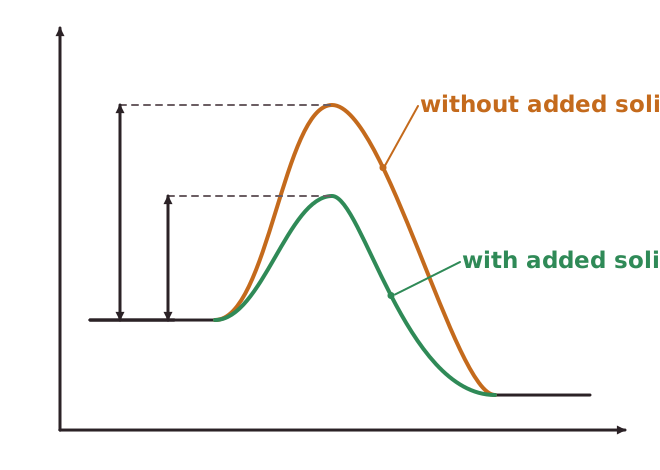
A catalyst is a substance that increases the rate of a reaction without being used up. Because it is not used up, it is chemically unchanged at the end of the reaction and can be reused. Only a small amount of catalyst is usually needed.
A catalyst is not a reactant or a product, so it does not appear in the overall equation. For example, manganese(IV) oxide is a catalyst for the decomposition of hydrogen peroxide: 2H2O2 → 2H2O + O2. The products are water and oxygen. If you add 0.5 g of manganese(IV) oxide, filter it off at the end and dry it, you still have 0.5 g.
Catalysts are usually specific. A catalyst that works well for one reaction may not work for another. Copper powder, for example, speeds up the reaction of zinc with sulfuric acid. A catalyst works by giving the reaction a different pathway that needs less energy, so more collisions are successful and the rate increases.