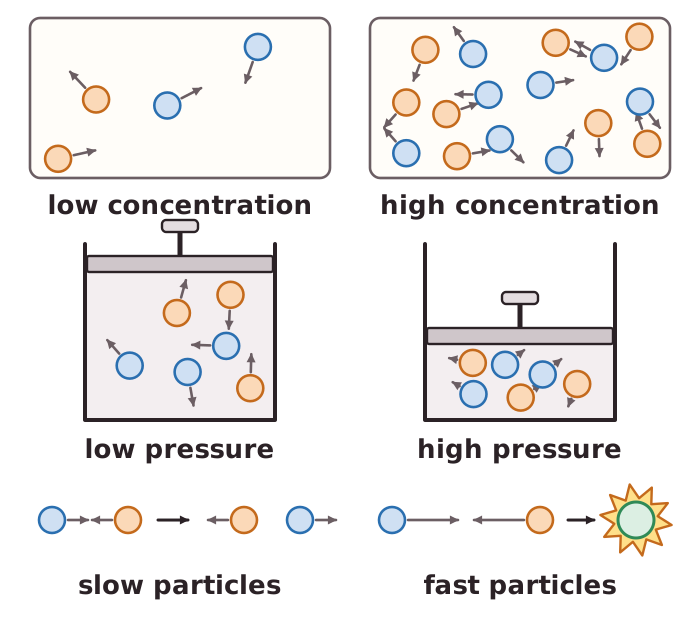
For a reaction to happen, particles must collide with enough energy to react. A collision with too little energy does not cause a reaction. The minimum energy needed is called the activation energy. The rate of reaction depends on how often particles collide and on how many of the collisions have enough energy.
Raising the concentration of a solution means there are more particles in the same volume. The particles are closer together, so collisions are more frequent and the rate increases. Raising the pressure of a gas works in the same way. The gas particles are squeezed closer together, so the frequency of collisions increases.
Raising the temperature makes the particles move faster. They collide more frequently, and each collision has more energy. A greater proportion of the collisions have enough energy, so more of them are successful. This is why temperature has a bigger effect on rate than a small change in concentration.