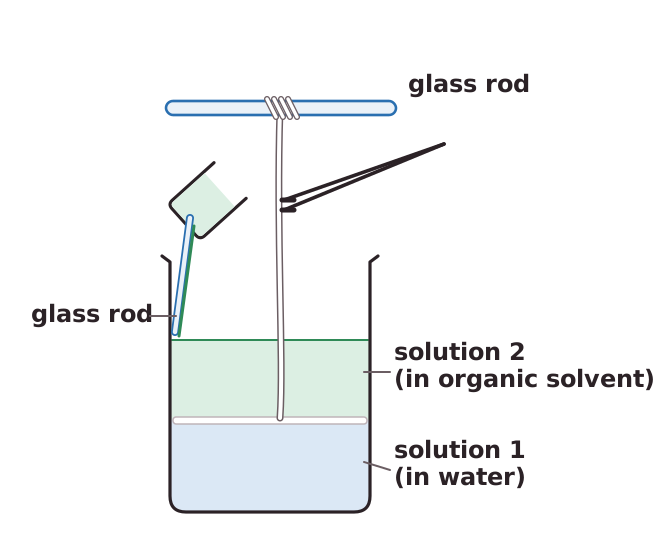
Nylon is a polyamide made by condensation polymerisation. In the laboratory, a solution of a diamine such as 1,6-diaminohexane in water is placed in a beaker. A solution of a diacyl chloride such as decanedioyl dichloride in an organic solvent is then poured slowly down the side of the beaker onto the top. The two liquids do not mix, so they stay in two layers.
Nylon forms as a film at the boundary between the layers. Grip the film with tweezers and pull it up slowly. More nylon keeps forming at the boundary, so a continuous rope can be wound onto a glass rod. The small molecule made at each link is hydrogen chloride, not water, because a diacyl chloride is used. Wash the nylon well before touching it.
Safety: wear eye protection and gloves, and work in a fume cupboard because the organic solvent is flammable and harmful and the diacyl chloride is corrosive. To compare methods fairly, keep the volumes and concentrations of the solutions the same and compare the length of nylon rope drawn out.