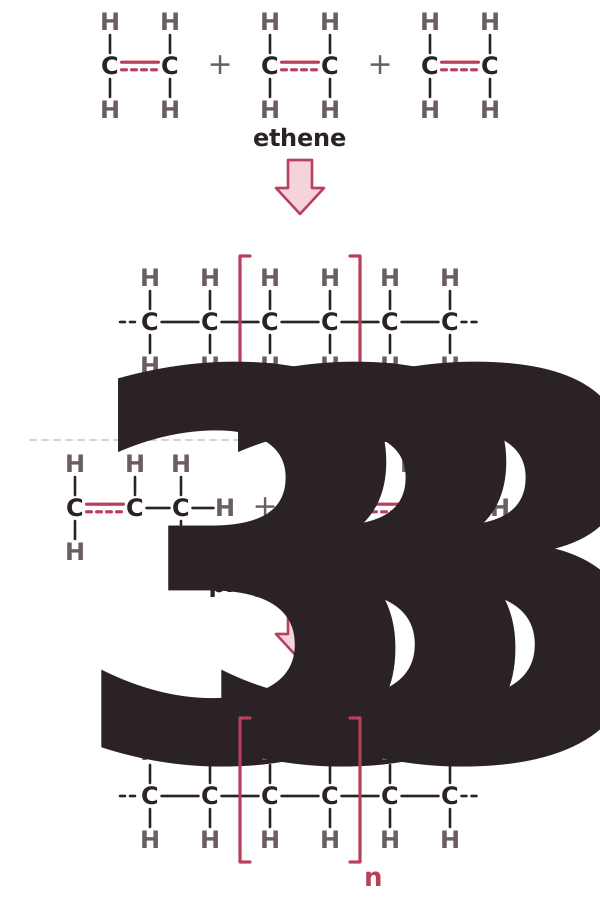
Alkene molecules contain a C=C double bond. In addition polymerisation, many small alkene molecules called monomers join together to make one very long molecule called a polymer. The double bond in each monomer opens, and each carbon atom forms a new single bond to the next monomer.
Only one product is made. No other molecule is lost, so all the atoms of the monomers end up in the polymer. That is why it is called addition. Because the double bonds have opened, the polymer has only single bonds, so it is saturated.
The polymer is a long chain of the same repeating unit, written as [repeat unit]n where n is a very large number. The repeating unit has the same atoms as the monomer but no double bond. Ethene is the monomer for poly(ethene) and propene is the monomer for poly(propene). A molecule with only single bonds, such as an alkane, cannot form an addition polymer.