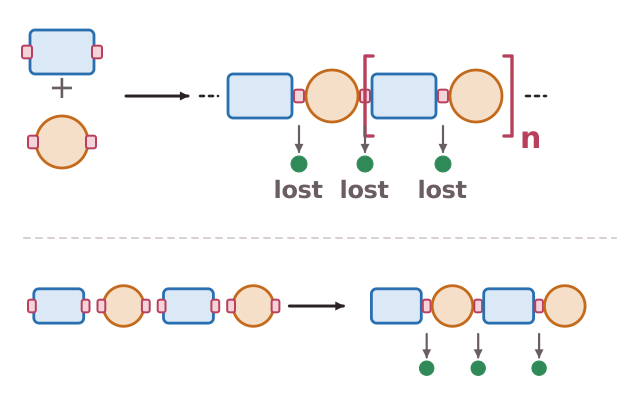
In condensation polymerisation, monomers join together and, at the same time, a small molecule is lost at every link that forms. The small molecule is often water. Each monomer must have at least two functional groups, one at each end, so that the chain can grow in both directions. A monomer with only one functional group would stop the chain.
A polyester is made from a dicarboxylic acid (two -COOH groups) and a diol (two -OH groups). The monomers join with an ester link and water is lost. A polyamide is made from a dicarboxylic acid and a diamine (two -NH2 groups). The monomers join with an amide link and water is lost.
Block diagrams show these polymers. Draw a rectangle for one monomer and a circle for the other, then join them in an alternating chain: rectangle, circle, rectangle, circle. The number of repeating units is written as n. Every link releases one small molecule, so ten monomers joined in a chain make nine links and release nine small molecules.