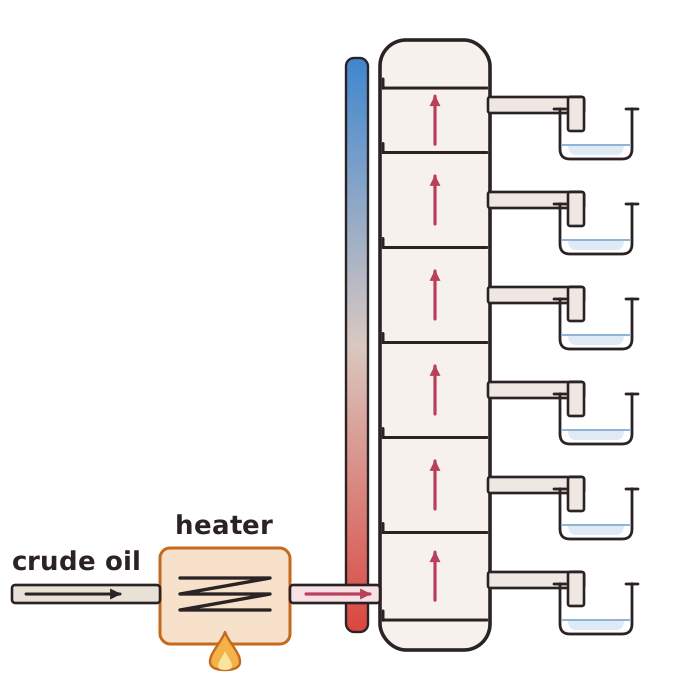
Crude oil is a mixture of many hydrocarbons with different chain lengths. It is separated into useful parts called fractions by fractional distillation. Each fraction contains hydrocarbons with similar boiling points.
The crude oil is heated until it vaporises, and the vapour passes into the bottom of a tall fractionating column. The column is hot at the bottom and cooler at the top. As the vapours rise, each one condenses when it reaches a part of the column that is cooler than its boiling point. The liquids are then drained off at different heights.
The main fractions, from the top of the column to the bottom, are refinery gases, petrol, kerosene, diesel oil, fuel oil and bitumen. The refinery gases have the smallest molecules and leave at the top. Bitumen has the largest molecules and drains from the bottom as a thick residue.