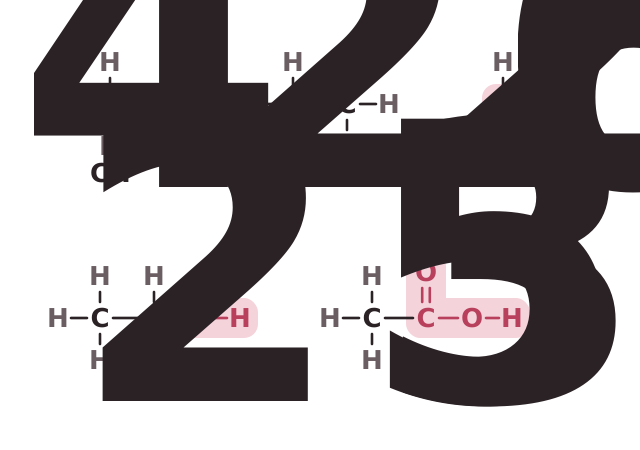
A functional group is an atom or group of atoms in a molecule that decides how the compound reacts. Alkanes have only single bonds between their carbon atoms, so they are saturated and have no special group. Alkenes contain a C=C double bond. Alcohols contain the -OH group. Carboxylic acids contain the -COOH group.
A homologous series is a family of compounds with the same functional group and the same general formula. Members have similar chemical properties, and physical properties such as boiling point change gradually as the chain gets longer. Neighbouring members differ by one carbon atom and two hydrogen atoms (a CH2 unit).
The general formula of the alkanes is CnH2n+2, so pentane has 5 carbon atoms and 12 hydrogen atoms. The general formula of the alkenes is CnH2n. The end of a name shows the series: -ane for alkanes, -ene for alkenes, -ol for alcohols and -oic acid for carboxylic acids. So ethene is an alkene, ethanol is an alcohol and ethanoic acid is a carboxylic acid.