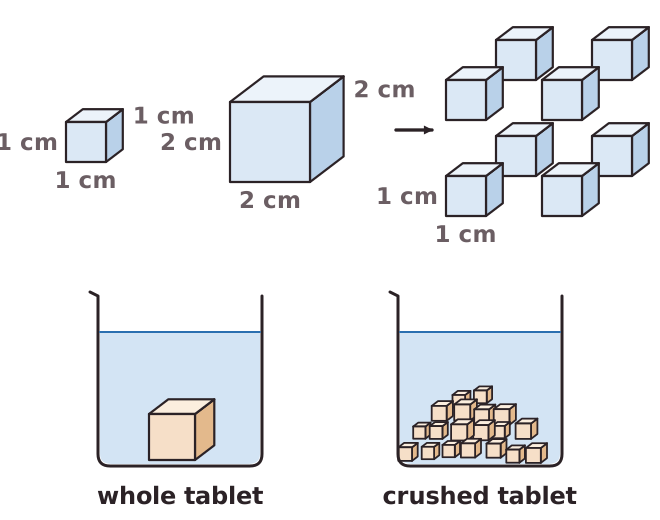
The surface area to volume ratio compares the area on the outside of an object with the space inside it. For a cube with sides of 1 cm, the surface area is 6 cm2 and the volume is 1 cm3, so the ratio is 6:1. For a cube with sides of 2 cm, the surface area is 24 cm2 and the volume is 8 cm3, so the ratio is 3:1.
The smaller the particle, the larger its surface area to volume ratio. If the side of a cube is divided by 10, the ratio is multiplied by 10, so 6:1 becomes 60:1. When a solid is broken into smaller pieces, the total volume stays the same but the total surface area increases, so the ratio increases.
This changes properties. A smaller particle has more of its atoms on the surface, where they can touch other substances. So it reacts faster, dissolves faster and works better as a catalyst than the same mass of larger pieces.
In the dissolving tablets practical, a crushed tablet dissolves faster in water than a whole tablet of the same mass, because crushing exposes more surface to the water.