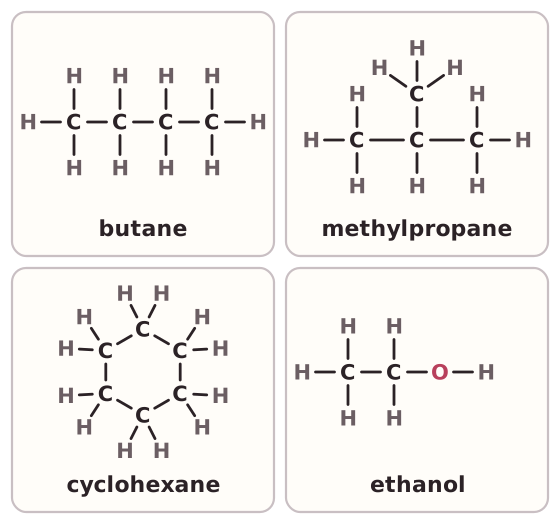
Carbon forms an enormous number of different compounds. Natural ones include the sugars, proteins and fats in living things and the hydrocarbons in crude oil. Synthetic ones are made by chemists, such as plastics, dyes and many medicines. Compounds based on carbon like these are called organic compounds.
This variety is possible because carbon atoms form four covalent bonds and can bond strongly to other carbon atoms. They join in long chains, which may be straight or branched, and in rings. Atoms of other elements such as hydrogen, oxygen and nitrogen can then be attached to this carbon skeleton.
Organic compounds fall into families of similar compounds, such as the alkanes and the alcohols. Members of the same family react in similar ways, so they have similar chemical properties. Within a family, the length of the carbon chain changes from one member to the next.