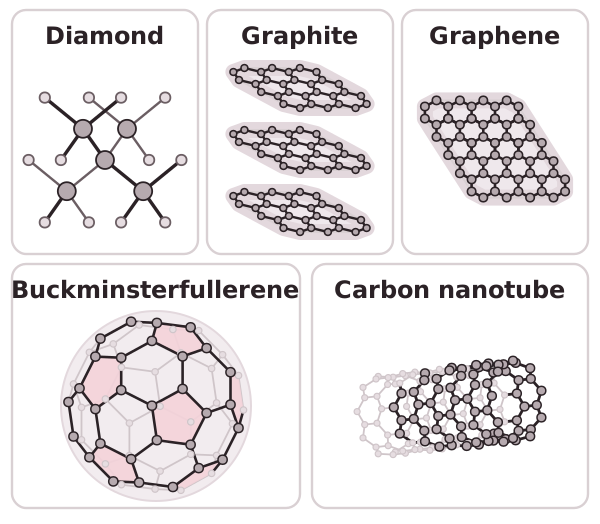
Diamond, graphite, fullerenes and graphene are all forms of pure carbon, but their structures differ so their properties differ. In diamond each carbon atom forms four strong covalent bonds to four other carbon atoms, making a rigid giant covalent structure. A lot of energy is needed to break these bonds, so diamond is very hard and has a very high melting point. It does not conduct electricity because it has no delocalised electrons or ions.
In graphite each carbon atom forms three covalent bonds, making flat layers of hexagons. The fourth outer electron of each atom is delocalised, which means it is free to move through the layer, so graphite conducts electricity. The layers are held together only by weak forces, so they slide over each other easily and graphite is soft and slippery. It still has a high melting point because the covalent bonds inside each layer are strong.
Graphene is a single layer of graphite, one atom thick. It is very strong, light and a good conductor because of its delocalised electrons. Fullerenes are molecules shaped like hollow cages or tubes, such as buckminsterfullerene, C60, and carbon nanotubes. Nanotubes are very strong and conduct electricity.