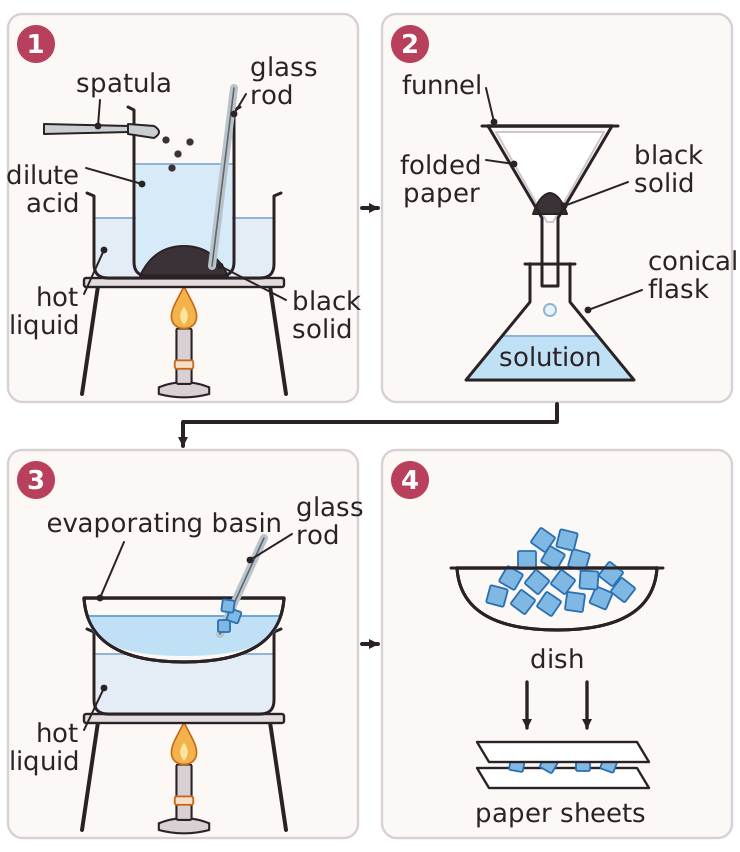
In this core practical, copper oxide, a black solid, is reacted with dilute sulfuric acid to make copper sulfate: copper oxide + sulfuric acid gives copper sulfate + water. First, dilute sulfuric acid is warmed in a beaker in a hot water bath. Copper oxide is added a spatula at a time and stirred until it is in excess. You know it is in excess when some black solid stays at the bottom and no more dissolves.
Filtration removes the excess copper oxide from the mixture. The solution that passes through is blue and contains copper sulfate. It is poured into an evaporating basin and heated gently in the water bath to evaporate some of the water. Heating stops when the solution is saturated, which is when crystals start to form on a glass rod dipped in and cooled.
The solution is then left to cool slowly so that crystals form. The crystals are filtered off, washed with a little cold distilled water and dried between filter paper. Gentle heating in a water bath is used because strong heating would drive off the water of crystallisation. The crystals are hydrated copper sulfate, which is blue.