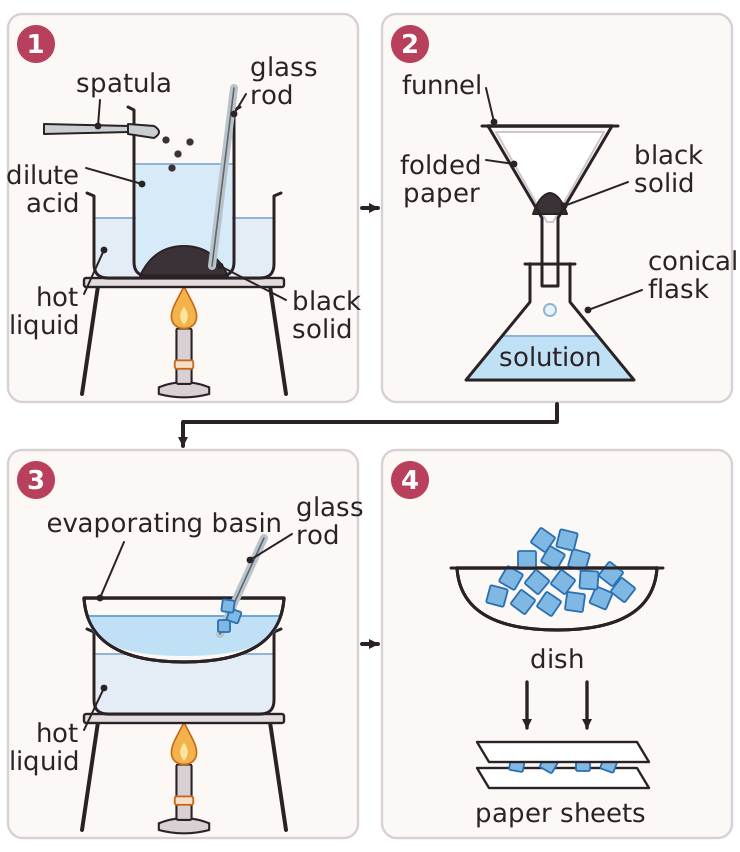
Some soluble salts are made from an acid and an insoluble reactant, such as copper oxide, zinc oxide or an insoluble carbonate. The solid is added to warm dilute acid a little at a time and stirred. It is added in excess, which means more than is needed, so that all of the acid is used up. You know it is in excess when no more solid dissolves and some solid is left at the bottom of the beaker.
Adding excess matters because any acid left over would stay in the solution and make the salt impure. Because the reactant is insoluble, the excess solid does not dissolve, so it can be removed by filtration. The solid stays in the filter paper and the solution passes through.
The solution that remains after filtering contains only the salt and water. There is no acid and no reactant left in it. The salt can then be obtained by evaporating some of the water and letting the solution crystallise. For example, excess copper oxide and sulfuric acid give a solution of copper sulfate and water.