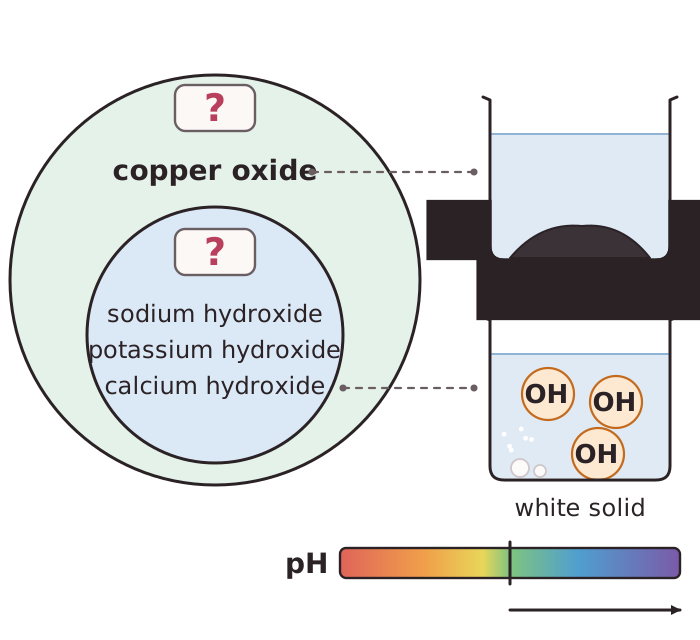
A neutralisation reaction is a reaction between an acid and a base. A base is any substance that reacts with an acid to form a salt and water only. Metal oxides and metal hydroxides are common bases.
A base that dissolves in water is called an alkali. Sodium hydroxide and potassium hydroxide are alkalis. Copper oxide is a base but it is not an alkali, because it does not dissolve in water.
When an acid and a base react, the acid and base use each other up. If an acid is added to an alkali until the reaction is complete, the mixture ends up close to neutral, which is pH 7. For example, hydrochloric acid and sodium hydroxide react to form the salt sodium chloride and water. Copper oxide and sulfuric acid react to form the salt copper sulfate and water.