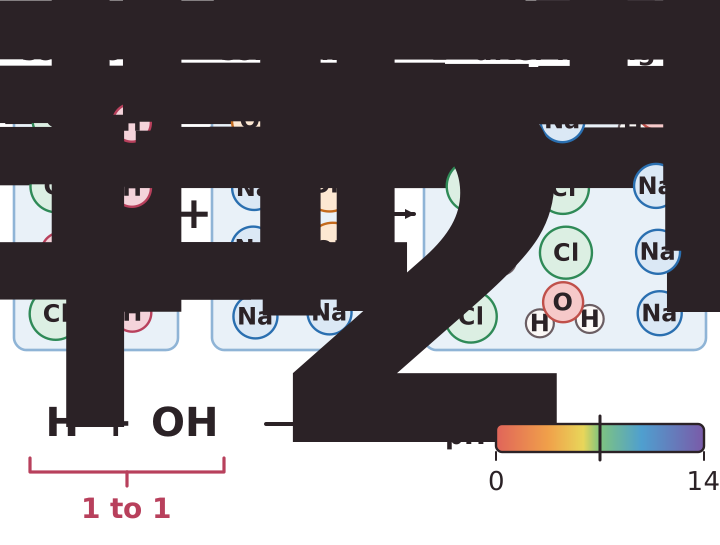
Acids in solution are a source of hydrogen ions, H+. Alkalis in solution are a source of hydroxide ions, OH-. These are the ions that matter in an acid-alkali neutralisation.
In neutralisation, the hydrogen ions from the acid react with the hydroxide ions from the alkali to form water. The ionic equation is H+ + OH- gives H2O. One hydrogen ion reacts with one hydroxide ion to make one water molecule, so the ions react in a 1 to 1 ratio. For example, 10 hydrogen ions need exactly 10 hydroxide ions to be neutralised.
A solution is neutral when it has equal numbers of hydrogen ions and hydroxide ions. Its pH is then 7. The other ions in the acid and the alkali do not change. They stay in the solution and together make up the salt.