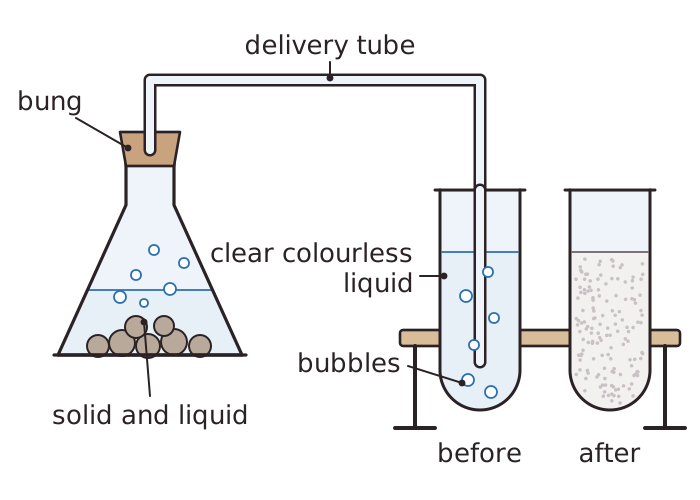
Carbonates react with dilute acids to form carbon dioxide gas. When dilute acid is added to a carbonate you see fizzing, which shows that a gas is being made.
The gas is identified using limewater, which is a solution of calcium hydroxide. The gas is bubbled through limewater, for example by using a delivery tube. If the gas is carbon dioxide, the limewater turns milky (cloudy).
For example, calcium carbonate reacts with dilute hydrochloric acid: CaCO3 + 2HCl → CaCl2 + H2O + CO2. Fizzing alone is not enough, because other gases can also fizz, so the limewater test is needed to show the gas is carbon dioxide.