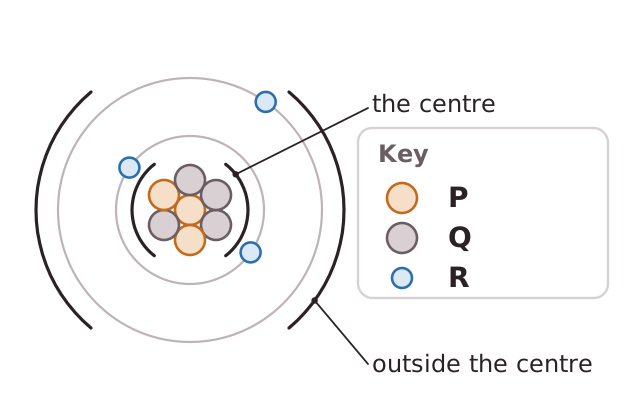
Atoms are made of three types of particle. The relative electrical charges are: proton +1, neutron 0 and electron -1. In the nuclear model, the protons and neutrons are in the nucleus at the centre, and the electrons are around the outside. Neutrons have no charge, so the nucleus has an overall positive charge.
In an atom the number of electrons is equal to the number of protons in the nucleus. The charges cancel, so atoms have no overall electrical charge.
The number of protons in an atom of an element is its atomic number. All atoms of a particular element have the same number of protons, and atoms of different elements have different numbers of protons. For example, carbon has atomic number 6, so every carbon atom has 6 protons and, because it is neutral, 6 electrons. Oxygen has atomic number 8.