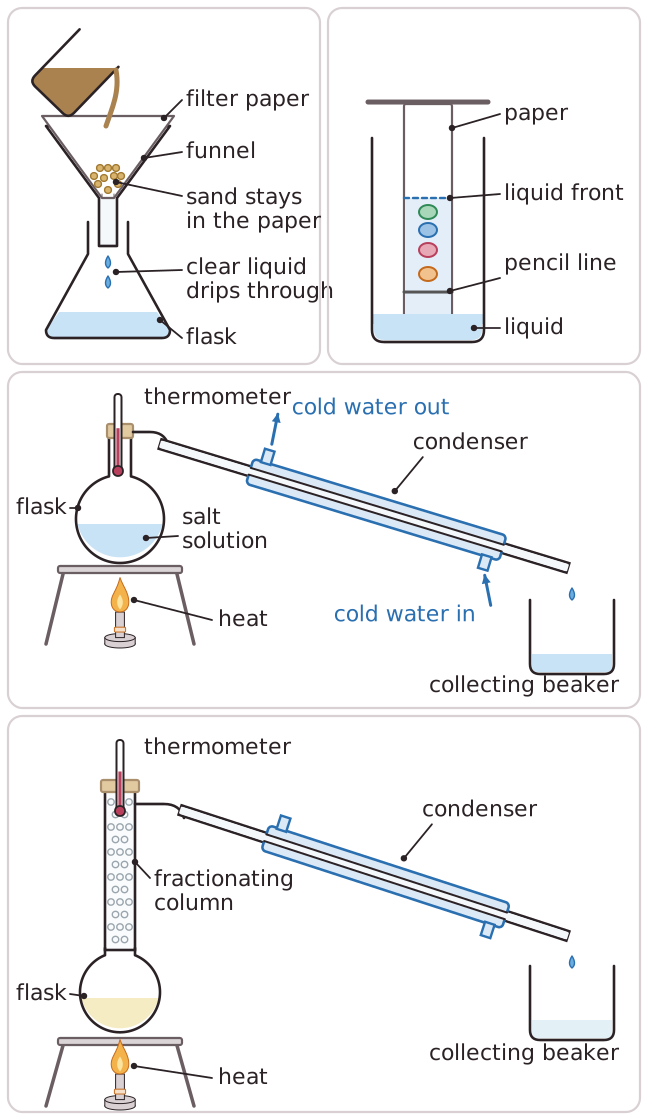
A mixture consists of two or more elements or compounds that are not chemically combined together. Air is a mixture of gases, mainly nitrogen and oxygen. Because no chemical reaction takes place when a mixture is made, each substance keeps its own chemical properties.
This means a mixture can be separated by physical processes. These do not involve chemical reactions and no new substances are made. Filtration separates an insoluble solid from a liquid, such as sand from water. Crystallisation obtains a dissolved solid from a solution: some of the solvent is evaporated and crystals form as the solution cools. Simple distillation separates a solvent from a solution, for example pure water from salt water: the solution is heated, the water evaporates, and the vapour is condensed and collected.
Fractional distillation separates a mixture of liquids that have different boiling points, such as the parts of crude oil. The liquid with the lowest boiling point evaporates first. Chromatography separates substances that dissolve in a solvent, because they move different distances across the paper. To choose a method, look at what is known about the mixture: whether a solid is soluble, and whether the liquids have different boiling points.