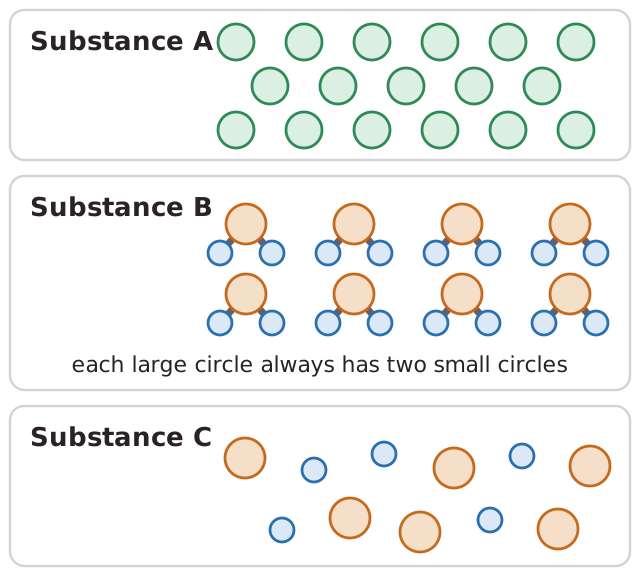
All substances are made of atoms. An atom is the smallest part of an element that can exist. An element contains only one type of atom. There are about 100 different elements and they are shown in the periodic table. Each element has a chemical symbol, for example O represents an atom of oxygen and Na represents an atom of sodium.
Atoms join together in chemical reactions. A compound contains two or more elements chemically combined in fixed proportions. Water, H2O, always has two hydrogen atoms for every oxygen atom, so 6 hydrogen atoms are always found with 3 oxygen atoms. A compound can be represented by a formula made from the symbols of its elements. It can only be separated back into its elements by a chemical reaction.
A chemical reaction always makes one or more new substances and often has a detectable energy change, such as a rise in temperature. Reactions can be written as word equations, for example magnesium + oxygen → magnesium oxide, or as symbol equations, for example 2Mg + O2 → 2MgO. A name ending in -ide, such as sodium chloride, usually tells you the compound contains just two elements.