 BRAINCAKE
Distillation
Distillation separates a liquid from a mixture by boiling it and condensing the vapour. In organic synthesis it is used to remove a volatile product from a reaction mixture, or to separate liquids with different boiling points.
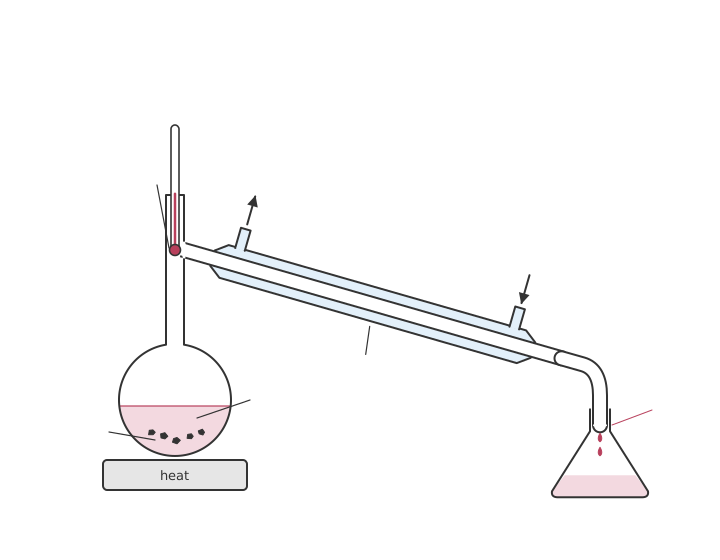
The mixture is heated in a round-bottomed flask containing anti-bumping granules, which give smooth boiling. A still head holds a thermometer with its bulb level with the side arm, so it reads the temperature of the vapour leaving the flask. The vapour passes into a Liebig condenser, cooled by water that enters at the bottom and leaves at the top so the jacket stays full of cold water. The condensed liquid, the distillate, drips into a collecting flask.
Sign in free to see the rest of this lesson, the R.E.C.I.P.E. recall steps and the quiz
BrainCake is free. Make an account in seconds and pick up where this page stops.
More in Organic Synthesis
- Heating under Reflux
- Using a Separating Funnel
- Drying an Organic Liquid
- Redistillation and Purification
- Identifying Functional Groups
- Two-Stage Synthetic Routes
- Predicting Properties from Functional Groups
All 8 lessons in Organic Synthesis · All OCR AS-level Chemistry topics