Halogenoalkanes react with potassium cyanide dissolved in aqueous ethanol to form nitriles. The mixture is heated under reflux.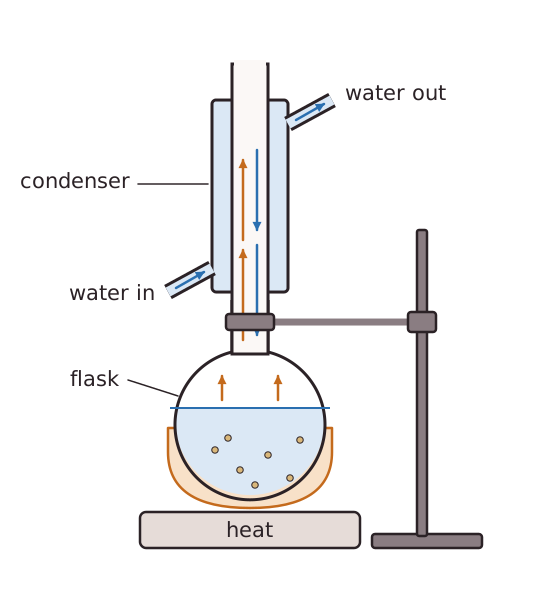 The cyanide ion CN- is the nucleophile. It attacks the δ+ carbon using the lone pair on its carbon atom, and the halide ion leaves.For example: CH3CH2Br + KCN → CH3CH2CN + KBr. The product is propanenitrile, because the carbon in the C≡N group is counted in the name.This reaction is useful because it adds one carbon atom to the carbon chain. Potassium cyanide is highly toxic, so it must be handled with great care.