Halogenoalkanes react with warm aqueous sodium hydroxide to form alcohols. This is a nucleophilic substitution in which the hydroxide ion is the nucleophile. It is also called hydrolysis.For example: CH3CH2Br + NaOH → CH3CH2OH + NaBr. The ionic equation is CH3CH2Br + OH- → CH3CH2OH + Br-.The mixture is heated under reflux so that volatile reactants and products condense and return to the flask instead of escaping.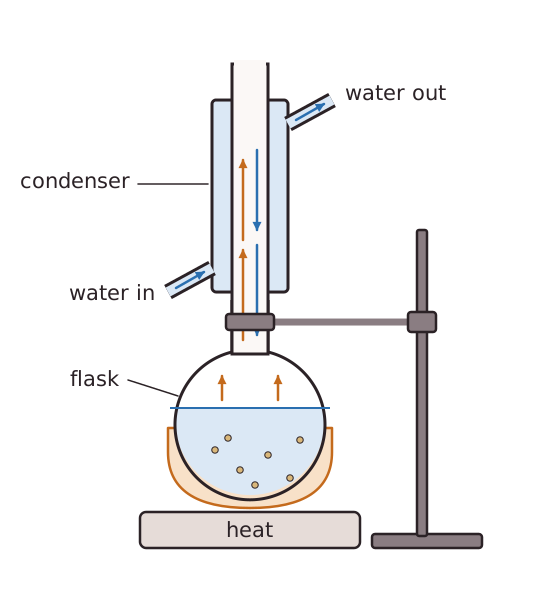 The solvent must be water. Aqueous conditions make substitution the main reaction, while hydroxide ions in ethanol tend to cause elimination instead.In the mechanism, the lone pair on the oxygen of OH- attacks the δ+ carbon and the halide ion leaves.