Sodium chloride has ionic bonding.Sodium has 11 protons and 11 electrons. The electronic configuration is:1s2 2s2 2p6 3s1Chlorine has 17 protons and 17 electrons. The electronic configuration is:1s2 2s2 2p6 3s2 3p5A sodium atom transfers its outer main level electron to a chlorine atom. The outer electron moves into the outer main level of the chlorine atom. Its outer main level is now full.Sodium becomes a positive Na+ +1 ion and chlorine becomes a negative Cl- -1 ion.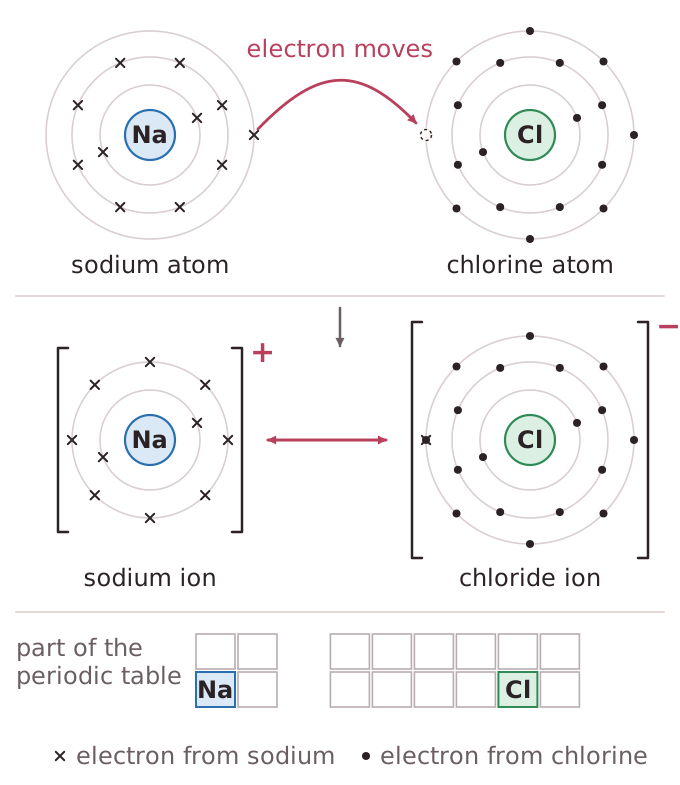 The two ions form an ionic bond (electrostatic attraction).