 BRAINCAKE
Electronegativity
Electronegativity is the attraction of a bonded atom for the pair of electrons in a covalent bond.
One of the bonded atoms may have a greater attraction for the shared pair of electrons than the other. The result is that the shared pair of electrons is not shared evenly and the electron cloud is distorted the bond becomes polar.
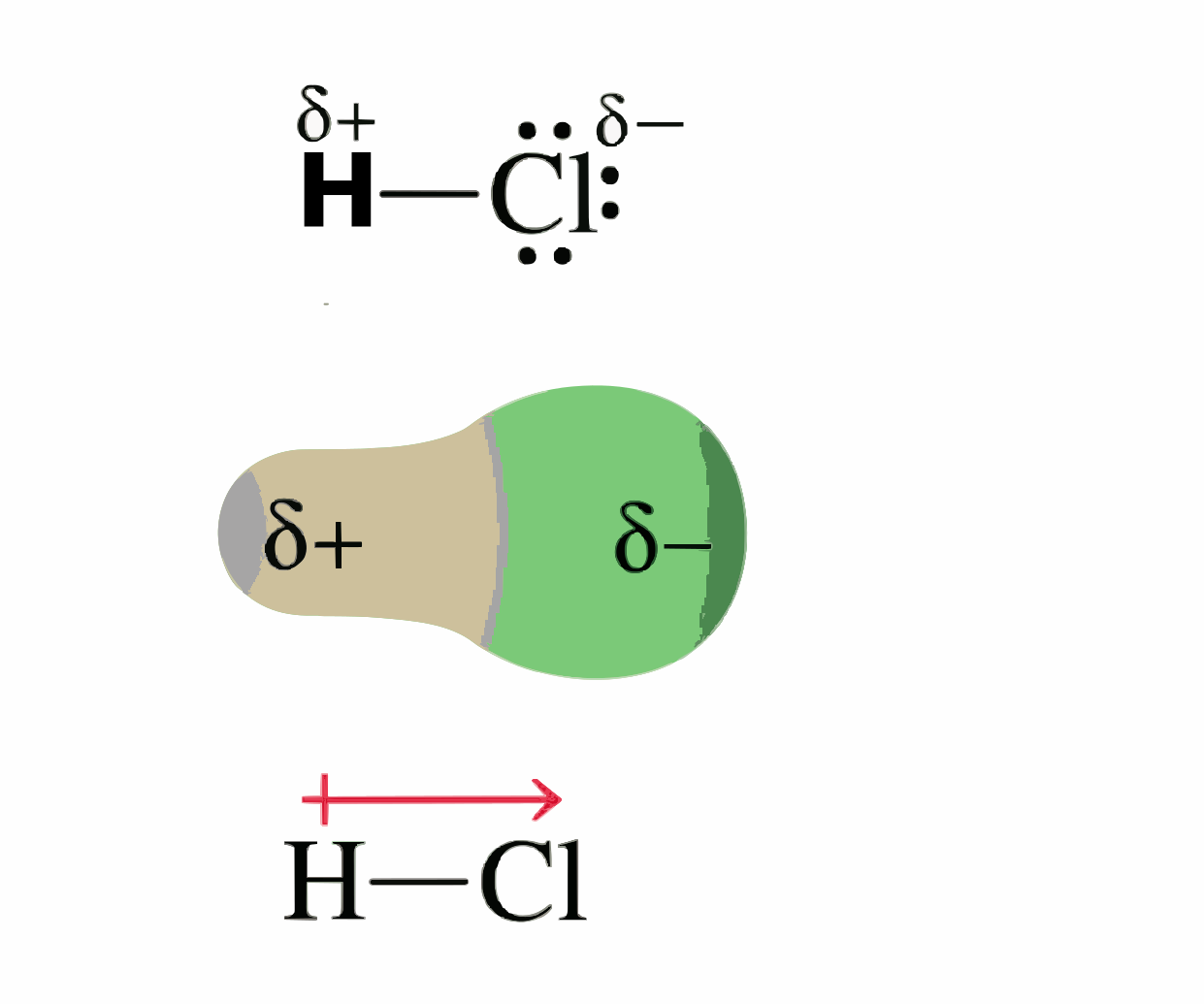
Sign in free to see the rest of this lesson, the R.E.C.I.P.E. recall steps and the quiz
BrainCake is free. Make an account in seconds and pick up where this page stops.
Key terms in this lesson
- Covalent bond
- A strong electrostatic attraction between a shared pair of electrons and the nuclei of the bonded atoms.
- Atomic radius
- A measure of the size of an atom, found by measuring the distance between two adjacent nuclei and dividing by two.
- Group
- A vertical column of the periodic table, containing elements with the same number of outer-shell electrons.
- Period
- A horizontal row of the periodic table, containing elements with the same number of electron shells.
More in Bonding
- Single and Double Covalent Bonds
- Co-ordinate Bonding
- Metallic Bonding
- Properties of Metals
- Trends in Electronegativity
- Polar Covalent Bonds
- Dipole-Dipole Forces
- Van der Waals forces
All 30 lessons in Bonding · All AQA AS-level Chemistry topics