 BRAINCAKE
Practical Techniques - Heating under Reflux
Many organic reactions are slow at room temperature, so the mixture must be heated for a long time. But organic reactants and products are often volatile and would boil away from an open flask. Heating under reflux solves this: the mixture is heated with a condenser fitted vertically above the flask, so vapour condenses and drips back into the flask. The reaction can continue for as long as needed without losing material.
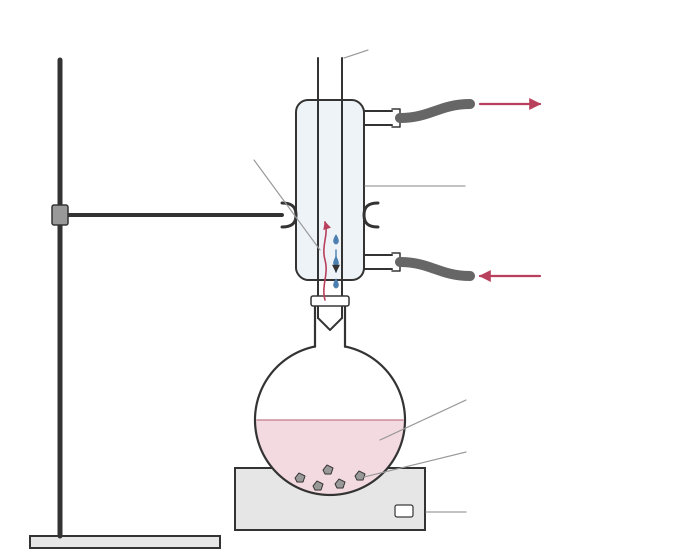
Key points of the apparatus:
Sign in free to see the rest of this lesson, the R.E.C.I.P.E. recall steps and the quiz
BrainCake is free. Make an account in seconds and pick up where this page stops.
More in Organic Synthesis
- Grignard Reagents and Carbon Dioxide
- Grignard Reagents and Carbonyl Compounds
- Organic Synthesis
- Synthetic Routes
- Recrystallisation
- Melting and Boiling Point Determination
- Hazards and Risks in Organic Synthesis
- Planning a Multi-Step Synthesis
All 11 lessons in Organic Synthesis · All Edexcel A-level Chemistry topics