 BRAINCAKE
Thin-Layer Chromatography
Thin-layer chromatography (TLC) is a quick, cheap way to separate a small sample, check its purity or identify its components.
The stationary phase is a thin layer of a solid, usually silica (SiO2) or alumina (Al2O3), on a flat glass, metal or plastic plate. The mobile phase is a liquid solvent.
Method:
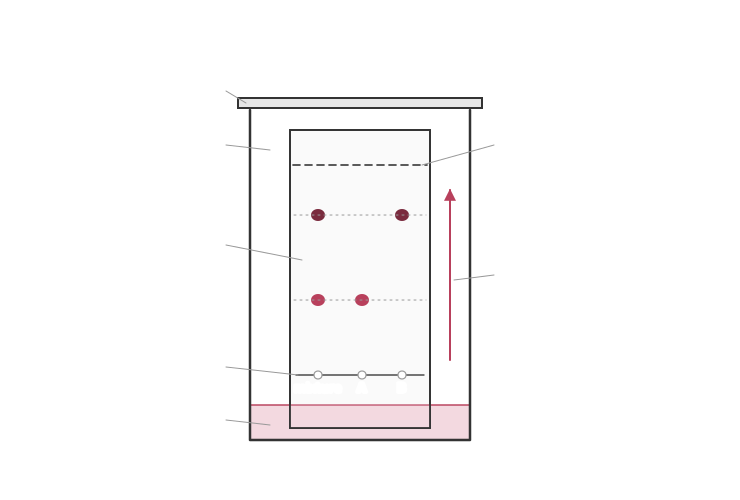
1. Draw a baseline in pencil about 1 cm from the bottom of the plate. (Ink would dissolve in the solvent and separate too.)
2. Put small spots of the mixture, and of known reference substances, on the baseline.
3. Stand the plate in a beaker containing a small depth of solvent. The solvent level must be below the baseline, so the spots do not dissolve into the solvent in the beaker.
Sign in free to see the rest of this lesson, the R.E.C.I.P.E. recall steps and the quiz
BrainCake is free. Make an account in seconds and pick up where this page stops.
More in Chromatography
- Chromatography
- Rf Values
- Column Chromatography
- Gas Chromatography
- Retention Times
- Combining Chromatography with Mass Spectrometry
All 7 lessons in Chromatography · All AQA A-level Chemistry topics